Why new wheels?
The Impact of a Wheel Swap
Choosing to swap the wheels on a custom project is a major step. While the visual change is immediate, the most significant impact happens at a mechanical level. A well executed swap improves how a bike feels, how it handles, and how it performs.
The main benefits
Aesthetic identity
The wheels define the silhouette and stance of a motorcycle. Changing sizes or designs can completely redefine the character of a build. It is the foundation of the look you are after, whether you are building a tracker, a classic, or a modern racer.
Improved handling
Lighter wheels make a motorcycle more responsive to your input. It becomes less physically demanding to maneuver, especially at speed.
Enhanced braking
Most wheel swaps provide the space needed for larger discs and modern calipers. This is a practical way to significantly increase your stopping power.
Modern tire selection
Swapping to standard rim sizes allows you to use modern tire compounds. This provides better grip and safety compared to obsolete vintage sizes.

The technical reality
To understand why a wheel swap improves a bike, we have to look at the physics.

Understanding unsprung mass
Unsprung mass refers to every part of the motorcycle that is not supported by the springs of your suspension. This includes the wheels, tires, brakes, and part of the swingarm and forks. Because this weight sits directly on the road, it has a massive impact on how the bike behaves.

Suspension response
The lighter the unsprung mass, the easier it is for your suspension to do its job. When you hit a bump, the wheel has to move up and then back down as quickly as possible. A heavy wheel has a lot of momentum, making it harder for the springs and dampers to control that movement. By reducing wheel mass, you help the tire stay in contact with the road, which improves grip and comfort.
Rotational inertia
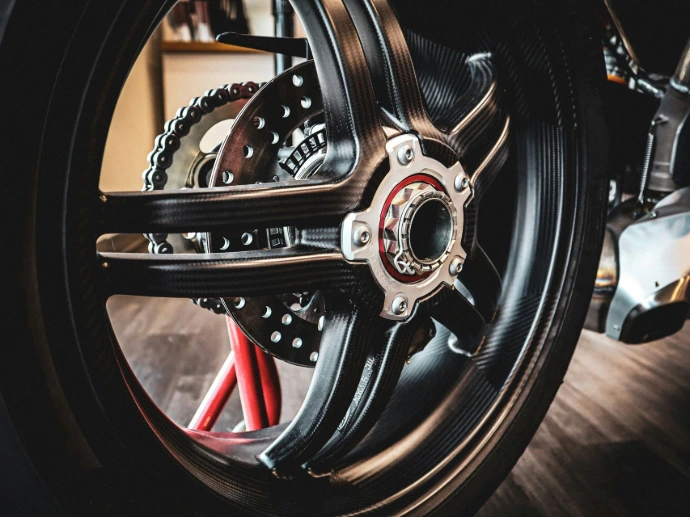
Because wheels spin, they also act as flywheels. This is called rotational inertia. A heavy wheel requires more energy to start spinning and more energy to slow down. When you switch to lighter wheels, you reduce this inertia. This results in a motorcycle that accelerates quicker and stops more efficiently with the same amount of force.

The gyroscopic effect
Spinning wheels also create a gyroscopic effect, which is the force that wants to keep the motorcycle upright. While this provides stability, too much of it makes the bike feel heavy in corners. Lowering the weight of the wheels reduces this force, making the bike much more agile and easier to lean into a turn.
Rim geometry and tire profile
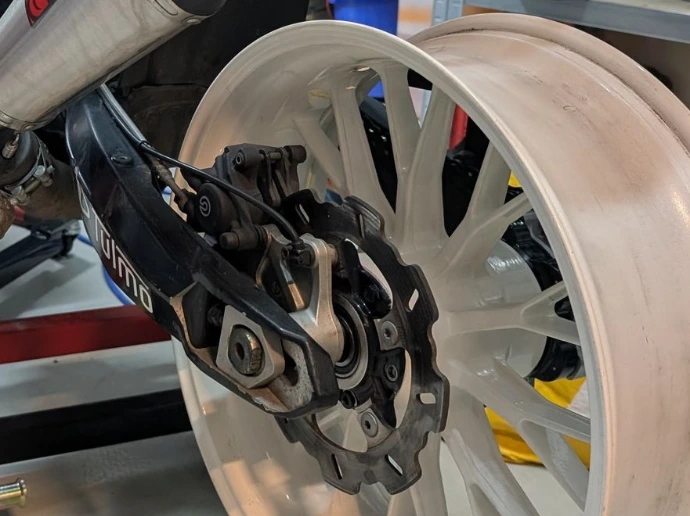
Tires are engineered for specific rim widths to reach their intended profile. Mounting a modern tire on the wrong rim width distorts the shape. This leads to unpredictable handling because the contact patch is no longer what the manufacturer intended. A technical swap ensures the rim width matches the tire requirements for consistent behavior.
Alignment and tracking
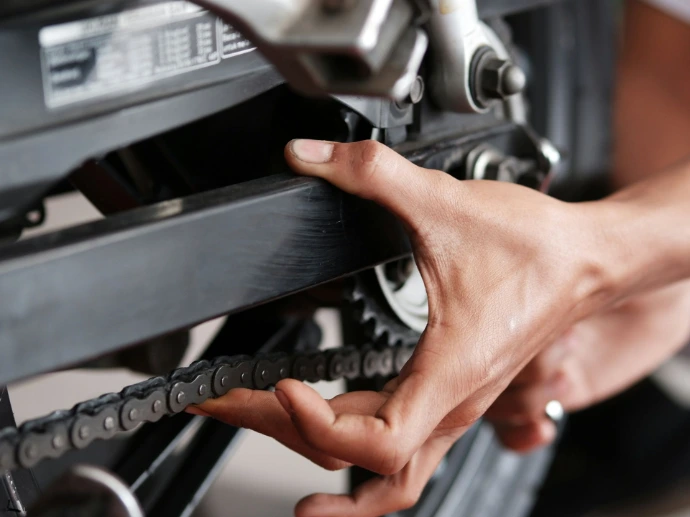
A wheel swap is only successful if the wheels track true. This means the front and rear wheels must be perfectly aligned on the centerline of the bike. We calculate the exact offsets for the sprocket and brake discs. This keeps the chain line straight and ensures braking forces are distributed evenly across the chassis.
Hub and spacing dimensions
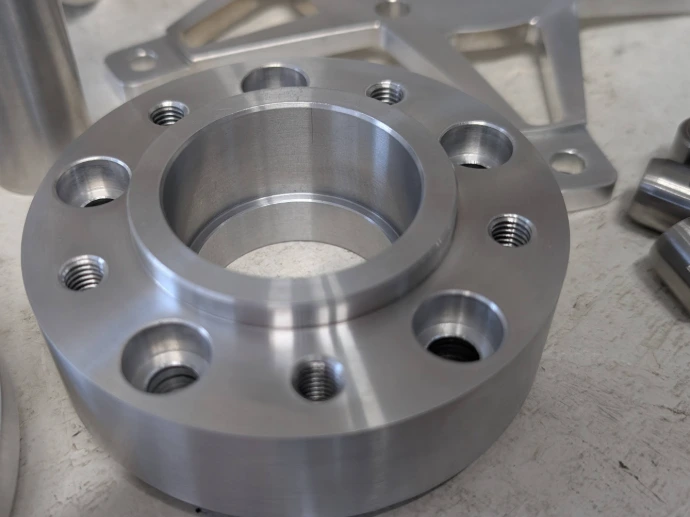
Every manufacturer uses different hub widths and axle diameters. Integrating a donor wheel requires bespoke spacers and often custom axles. This ensures the wheel is integrated with the correct tolerances and bearing loads, providing a reliable foundation for the rest of your build.
Engineering the swap
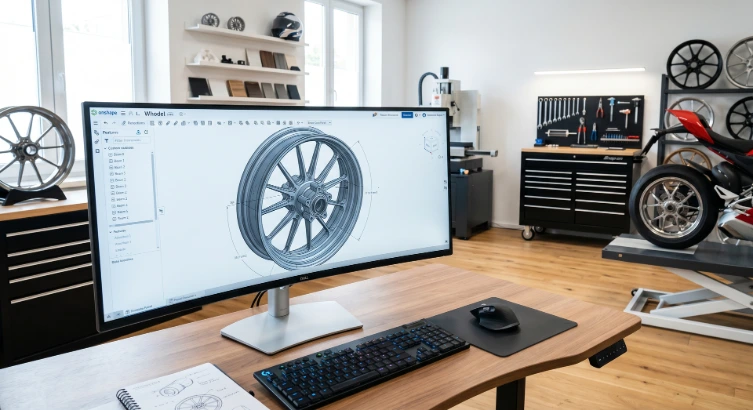
At Tulmo, we see a wheel swap as a technical puzzle. We use CAD and 3D prototyping to bridge the gap between different brands and eras of hardware. Our goal is to provide the data and components you need to turn your vision into a technically sound motorcycle.
Raise your project to the next level
You’ve got the vision. We have the technical knowhow. Reach out and let’s discuss your wheel swap.
Don't miss our upcoming updates
Get all the latest news, blog posts and product updates from our company, delivered directly to your inbox.